
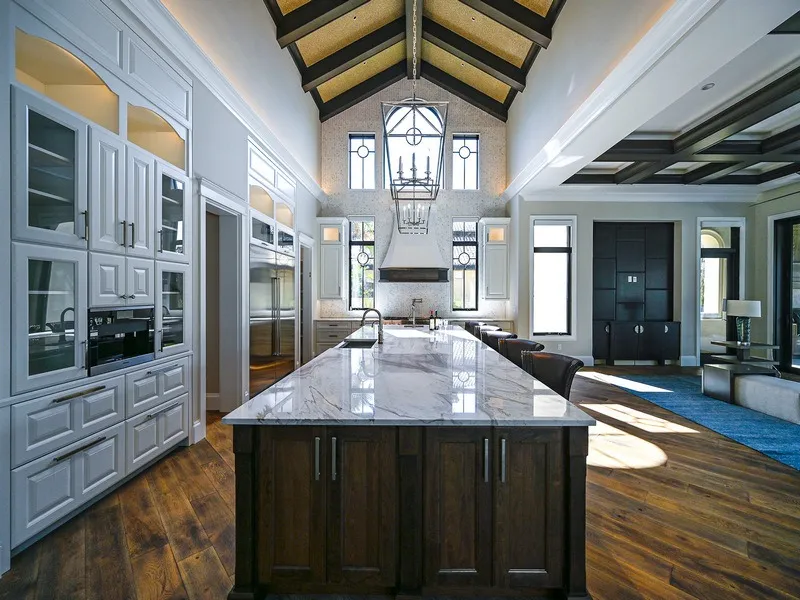
Oak floors have a way of grounding a home. They’re warm, familiar, and full of character. But once you step into the kitchen, that warmth can quickly turn into a design headache. Suddenly the question becomes: what flooring actually looks good next to hardwood, especially oak?
If you’re trying to connect a kitchen to existing oak floors without it feeling choppy or mismatched, you’re not alone. This is one of the most common flooring questions we hear, and the answer isn’t one-size-fits-all. It depends on tone, contrast, lifestyle, and how your home flows.
Let’s break it down in a way that actually helps.
Start by understanding your oak floors
Before you look at new materials, take a good look at the oak you already have.
Oak typically falls into three buckets: light, medium, or dark. Beyond color, it also has visible grain and warm undertones that influence everything around it. Ignoring those undertones is usually where things go wrong.
Oak is timeless, but it’s also opinionated. The flooring next to it needs to either complement it or intentionally contrast it, not compete with it.
Flooring options that pair well with oak
Porcelain or ceramic tile
Porcelain tile is one of the safest and most popular choices next to oak floors, especially in kitchens.
It’s durable, easy to clean, and handles moisture without complaint. Visually, it works because it creates a clean break from the wood while still feeling cohesive. Light neutral porcelain looks great next to medium or dark oak, while warmer beige or soft greige tiles tend to pair beautifully with lighter oak tones.
In Florida homes, this option checks both the design and practicality boxes.
Natural stone
Stone brings texture and depth that oak naturally responds well to.
Travertine, limestone, and even marble can work next to oak floors when the tones are aligned. The key is subtlety. Stone with heavy contrast or bold veining can overpower oak, while softer patterns create balance.
Stone works especially well in homes where the oak already has a classic or slightly rustic feel.
Engineered hardwood in a lighter tone
If your goal is continuity rather than contrast, engineered hardwood can work — but it needs to be handled carefully.
Choosing a lighter or less grained wood than your oak prevents the floors from looking like a near-miss. This approach works best in open floor plans where you want the kitchen to feel like an extension of the living space, not a separate zone.